
Hospitals lose an enormous amount of time to small visibility problems. A nurse needs an infusion pump that should be nearby but isn’t. A surgical tray is somewhere in the reprocessing workflow, but no one is sure where. A specimen has been collected and handed off, yet the status update hasn’t caught up. That’s where RFID in healthcare becomes practical. By using tags, readers, and RFID software to identify and track items without requiring line-of-sight scanning, hospitals can reduce manual searching and get clearer visibility into equipment, supplies, specimens, and workflow-sensitive assets. RFID helps hospitals know what they have, where it is, and whether it’s ready to use.
What Is RFID in Healthcare?
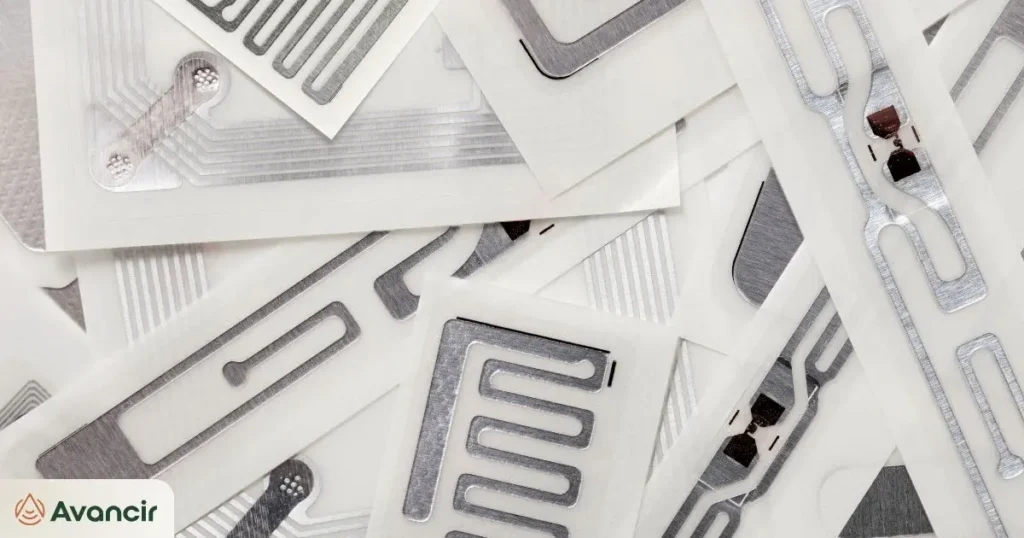
RFID in healthcare refers to the use of radio frequency identification technology to identify and track assets, supplies, samples, and in some workflows, patients. A typical system includes RFID tags, readers, and software that turns read events into usable status or location data. Unlike barcode systems, RFID does not always require direct line-of-sight, which is one reason it fits busy hospital environments where items move constantly and manual scanning gets missed. Healthcare teams may use passive RFID for lower-cost item labeling or active RFID when they need longer-range or more continuous visibility for mobile assets.
6 Practical Applications of RFID in Healthcare
1. Hospital Asset Tracking for Mobile Equipment
Hospital asset tracking is one of the clearest use cases for healthcare RFID. Mobile equipment such as infusion pumps, wheelchairs, crash carts, patient monitors, and portable imaging devices moves from room to room and department to department throughout the day. When staff can’t find those items quickly, the result is wasted time, lower utilization, and sometimes unnecessary rentals or duplicate purchases. RFID asset tracking helps teams locate equipment faster and understand how often it’s actually being used, which makes availability and planning easier to manage.
2. Tracking Surgical Trays and Procedure Kits
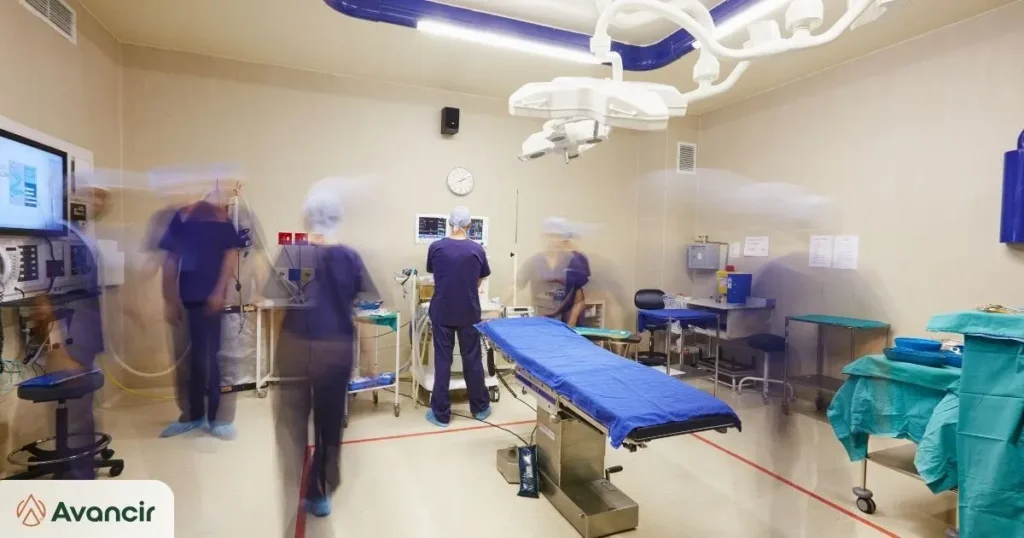
Surgical trays and procedure kits pass through tightly controlled workflows that involve sterile processing, storage, transport, and operating areas. The problem usually isn’t whether a hospital owns the tray. It’s whether the right team can confirm its location and status at the right moment. RFID gives hospitals better chain-of-custody visibility and clearer handoff tracking between those stages. In these workflows, hardware choice matters. Tags may need to handle repeated cleaning, sterilization exposure, and harsh handling conditions, so rugged or sterilization-resistant options are often part of a workable deployment.
3. Medication Tray and Cabinet Visibility
Medication-related workflows involve constant movement between pharmacy, nursing units, returns processes, storage, and replenishment points. That makes location awareness and item status harder to maintain with manual checks alone. RFID can support better visibility for medication trays, carts, and cabinet-contained items by reducing repetitive lookups and helping teams see whether items are where they’re expected to be. The biggest value here is operational consistency: fewer blind spots, more reliable replenishment decisions, and less time spent confirming the location of high-use items.
4. Specimen and Lab Sample Tracking
Specimen tracking is one of the most practical RFID solutions for hospitals and labs because samples move through multiple handoff points in a short amount of time. Collection, transport, lab receipt, and testing all create opportunities for delay or uncertainty if status updates depend entirely on manual steps. RFID can improve visibility across those transitions by making it easier to confirm where a sample is in the process and when it changed hands. GS1 case studies and healthcare workflow resources highlight sample and laboratory tracking as a strong fit for RFID-enabled traceability.
5. RFID Wristbands for Patient Identification and Workflow Support
RFID wristbands are another healthcare use case, especially in workflows tied to patient identification and movement. The best way to position this is practically, not dramatically. RFID can support admissions, transfers, and discharge-related workflows by reducing manual steps and giving staff better visibility into defined process checkpoints. It can help streamline identification within those workflows, but it should be treated as part of a broader patient identification process rather than a standalone answer to every identification challenge.
6. Inventory and Supply Tracking in Critical Areas
Hospitals also use RFID to improve inventory and supply tracking in spaces where items move quickly and availability matters. Supply rooms, labs, procedure areas, and high-use storage points can all benefit from better visibility into stock movement. That includes reusable items and consumables such as mobile carts, lab equipment, specialty supplies, and selected high-use inventory. RFID helps teams understand what has moved, what is missing, and what may need replenishment sooner, which supports better decisions in fast-moving clinical environments.
Benefits of RFID in Healthcare
The main benefits of RFID in healthcare are operational. Teams can locate equipment faster, which cuts time spent searching for high-demand assets. Hospitals can also improve asset utilization by seeing where items are and how often they’re used, which can reduce unnecessary purchases or rentals. Because RFID does not rely on direct line-of-sight scanning, it can remove some of the friction that comes with manual barcode-based processes. It also creates stronger visibility and auditability across handoff points, storage locations, and department workflows. In critical areas like labs, surgical environments, and supply rooms, that added visibility can support more accurate replenishment and better day-to-day control.
Ideal RFID Components for Hospitals and Labs
The right RFID setup depends on the workflow. Passive RFID tags are often the starting point for lower-cost item labeling and short-to-medium range reads. Active RFID tags are better suited for longer-range visibility or near real-time location awareness on important mobile assets. Fixed readers usually make the most sense at workflow handoff points such as doorways, cabinets, storage areas, and chokepoints where movement can be captured automatically. Handheld readers are useful for inventory sweeps, spot checks, and finding missing items. In healthcare, tag choice matters just as much as reader choice. Metal surfaces, cleaning requirements, sterilization exposure, and read-range needs all affect which hardware will work reliably.
Where Hospitals Should Start with RFID
The best place to start is rarely “everywhere.” Hospitals usually get better results by focusing on one clear workflow problem first. That might mean tagging infusion pumps that staff constantly search for, tracking crash carts between departments, improving visibility for surgical trays, or tightening handoffs for specimens. Early wins usually come from choosing assets that are high value, highly mobile, frequently searched for, or tied to recurring stock or status issues. Solve one visible problem well, then expand. That’s usually how RFID becomes a useful system instead of just another technology layer. This is an implementation recommendation based on the most common documented healthcare RFID use cases.
Next Steps for Hospitals Exploring RFID
RFID in healthcare is most valuable when it helps hospitals solve a clear operational problem. Whether the goal is tracking mobile equipment, improving specimen handoffs, managing surgical trays, or gaining better inventory visibility, the strongest deployments start with a defined workflow and the right combination of tags, readers, and software.
As hospitals begin evaluating options, Avancir can be a useful resource for exploring what a practical rollout might look like. Teams can download free RFID resources, request a personalized demo, or start an Avancir free trial to see how a configurable platform can support real-time visibility, workflow automation, and better day-to-day control. That makes it easier to evaluate what will work in your environment before scaling to additional departments or use cases.
Frequently Asked Questions About RFID in Healthcare
What is RFID in healthcare?
RFID in healthcare is the use of radio frequency identification technology to track and identify assets, supplies, samples, and some patient-related workflow items using tags, readers, and software.
How is RFID used in hospitals?
Hospitals use RFID for asset tracking, specimen and sample tracking, inventory visibility, surgical tray management, medication-related workflows, and some patient identification processes.
What are the benefits of RFID in healthcare?
The biggest benefits are faster item location, better asset utilization, reduced manual searching, stronger audit trails, and improved inventory visibility in high-use areas.
What hospital equipment is commonly tracked with RFID?
Common examples include infusion pumps, crash carts, wheelchairs, patient monitors, surgical trays, and portable medical devices.
What’s the difference between RFID and barcodes in healthcare?
Barcodes usually require line-of-sight scanning and are often read one item at a time. RFID uses radio waves, does not always require line-of-sight, and can support more automated reads.
Can RFID be used for patient identification?
Yes. RFID can be used in wristbands and workflow-specific patient identification processes, especially where hospitals want faster identification and better visibility at defined checkpoints.
Is RFID used for specimen and lab sample tracking?
Yes. Sample and specimen workflows are well suited to RFID because they involve multiple time-sensitive handoffs between collection, transport, and lab receipt.
What’s the difference between active and passive RFID in healthcare?
Passive RFID tags are generally used for lower-cost tagging and shorter read ranges. Active RFID tags use a power source and are better for longer-range or more continuous visibility on mobile assets.