
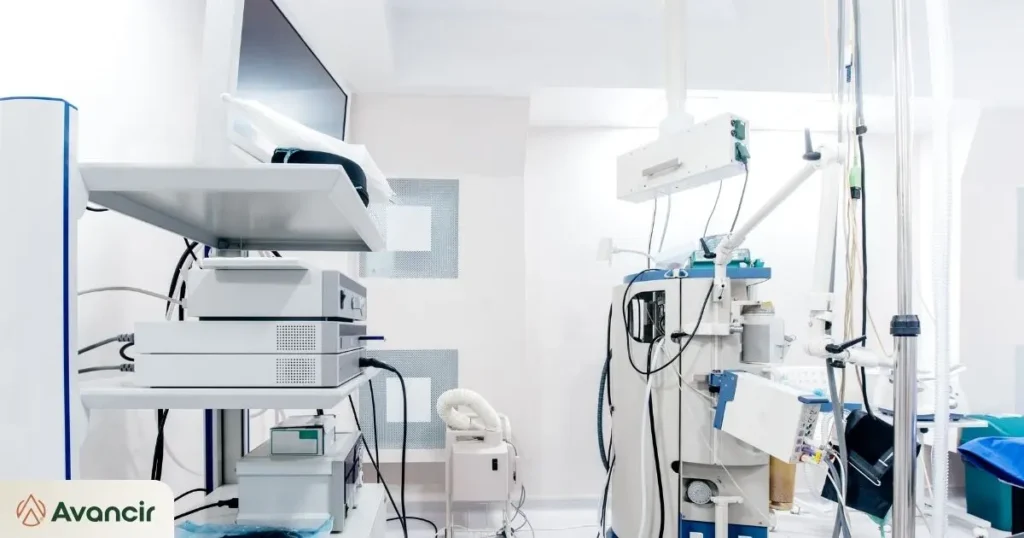
RFID in healthcare is used to identify, locate, and manage mobile medical equipment more efficiently. In healthcare asset tracking, RFID helps hospitals, clinics, and surgery centers keep track of items like infusion pumps, wheelchairs, patient monitors, crash carts, beds, and other shared equipment that moves constantly between departments.
This article focuses on healthcare asset tracking specifically, not every possible RFID healthcare application. The goal is simple: show how hospitals use RFID for asset tracking, what kinds of assets they track, and what matters when building a system that works in a real healthcare environment.
What Assets Do Healthcare Organizations Track with RFID?
Healthcare organizations usually begin with assets that are expensive, mobile, shared across departments, and difficult to find when staff need them quickly. Hospitals often start with mobile assets that are expensive, frequently used, and difficult to find.
One major category is high-use mobile equipment. That includes infusion pumps, wheelchairs, mobile workstations, patient monitors, and portable diagnostic devices. These assets move often, serve multiple departments, and can disappear into rooms, hallways, storage areas, or cleaning workflows.
Another category is critical care and emergency equipment. Defibrillators, crash carts, specialty monitors, and similar assets need to be available fast, especially during urgent situations. Hospital asset tracking becomes more valuable when delays in locating equipment affect response times.
Support equipment is also commonly tracked. Beds, transport equipment, and other mobile tools may not be the most expensive assets in a facility, but they create daily operational friction when they are unavailable or sitting idle in the wrong place.
In medical equipment tracking, the point is not just to count assets. It is to make sure the right equipment is visible and available when staff need it.
How RFID Is Used for Healthcare Asset Tracking
How RFID is used for healthcare asset tracking depends on the workflow, facility layout, and the level of visibility the organization needs.
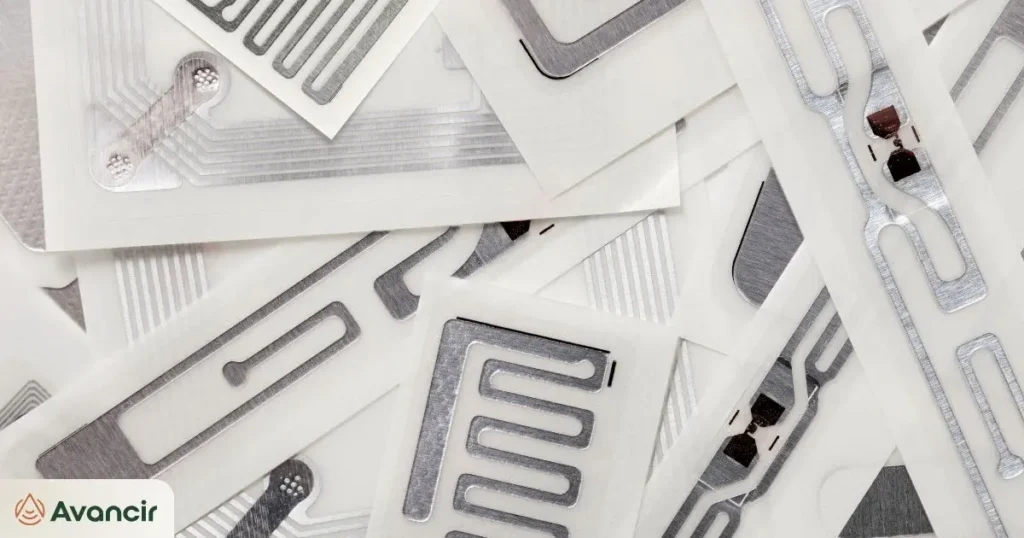
At the most basic level, an RFID tag is attached to the asset. That tag carries an identifier tied to the asset record in software. Readers then capture tag data at specific points in the facility or within defined read zones. The system uses that information to update asset location, movement history, or status.
In some RFID hospitals deployments, the goal is room-level or zone-level visibility. Staff may want to know whether an infusion pump is in central storage, on a patient care unit, in biomed, or in cleaning. In other cases, the system is built around choke-point reads at doors, hallways, or transitions between departments. That approach shows when equipment moves from one area to another, which can be enough for many hospital asset tracking use cases.
RFID can also support check-in, check-out, and inventory workflows. Instead of relying on manual records or physical searches, staff can see whether a device is available, in use, or returned for processing.
A practical example is an infusion pump moving from central storage to a patient unit, then later to cleaning, and finally back into circulation. The tag stays with the asset while readers and software create a usable movement record. That helps reduce time spent searching and improves availability without requiring staff to manually update every status change.
System design matters here. Tag choice, reader placement, and read zone design should reflect how equipment actually moves through the facility.
Operational Benefits of RFID in Healthcare
The biggest benefits of RFID in healthcare come from better visibility. When staff know where equipment is, they spend less time hunting for it and more time using it.
That shows up first in faster equipment location. A nurse or technician trying to find an available wheelchair or infusion pump should not have to call multiple departments or search unit by unit. Healthcare asset tracking gives teams a faster way to locate equipment that is already in the building.
It also improves asset utilization. Many facilities think they have an equipment shortage when the real problem is that assets are scattered, parked in the wrong location, or stuck in a workflow bottleneck. RFID healthcare systems can reveal whether the issue is true under-supply or poor visibility.
That visibility can reduce unnecessary purchases and rentals. When hospitals can see what they own and where it is, they are less likely to buy more equipment just because existing assets are hard to find.
There are also workflow gains across departments. Biomed, environmental services, nursing teams, transport staff, and operations leaders all benefit when equipment movement is easier to understand. In that sense, RFID in healthcare benefits and challenges should always be evaluated against actual operational problems, not just the technology itself.
How RFID Supports Patient Safety Through Better Asset Visibility
RFID improves patient safety in healthcare indirectly by helping staff access critical equipment faster. Asset tracking is not the same thing as patient tracking RFID or RFID patient identification, but it still supports care delivery in a practical way.
If staff can quickly locate a crash cart, monitor, wheelchair, or infusion device, they can reduce delays during busy shifts and urgent situations. Better visibility also helps make sure equipment is available where it is expected to be, rather than lost in transfer between departments or stuck in a processing queue.
That connection should be stated carefully. RFID asset tracking does not replace clinical judgment or care processes. What it does is reduce friction around equipment availability, which can support faster response and smoother workflows.
Common Implementation Considerations for Healthcare RFID
Successful healthcare asset tracking depends on deployment design, not just tags and readers.
The first question is which assets to track first. A phased rollout is usually more practical than trying to tag everything at once. Many hospitals begin with infusion pumps, wheelchairs, or other high-friction mobile assets before expanding into broader classes of equipment.
The next issue is location accuracy. Some use cases only need choke-point visibility between departments. Others need room-level awareness. That decision affects reader placement, infrastructure requirements, and software expectations.
Healthcare environments add complexity. Assets move through patient rooms, hallways, storage areas, cleaning stations, and repair workflows. Tags may need to withstand cleaning protocols, harsh handling, or specific attachment requirements. Reader placement has to match actual movement patterns, not an idealized map of the facility.
Software integration matters too. Medical equipment tracking becomes more useful when location data connects with maintenance records, asset databases, or operational dashboards. Staff adoption matters just as much. If the workflow does not fit how teams actually work, the system will struggle no matter how good the hardware is.
When people talk about RFID in healthcare benefits and challenges, this is usually the dividing line. Strong results come from aligning tags, readers, read zones, and software with real operational needs.
Related Healthcare RFID Applications Beyond Asset Tracking
Asset tracking is only one part of RFID in healthcare. Other applications include patient tracking RFID, RFID patient identification, RFID medication tracking, and RFID patient wristbands.
Those are important use cases, but they involve different workflows, risks, and system requirements. Asset tracking is often one of the most practical starting points because it addresses a clear operational problem without requiring a full redesign of patient-facing processes.
For many organizations, it is the most direct way to improve visibility, reduce search time, and build confidence in broader RFID adoption.
Final Takeaway: RFID Helps Healthcare Teams Track Critical Assets More Effectively
RFID in healthcare asset tracking helps organizations improve visibility, equipment availability, and day-to-day workflow efficiency. The value is not in adding technology for its own sake. It comes from making it easier to find, manage, and redeploy the assets that care teams rely on.
A well-planned RFID system starts with the assets, workflows, and read zones that matter most. For most healthcare teams, the best next step is to identify which mobile assets create the biggest visibility problems first.
Why Avancir Fits Healthcare Asset Tracking RFID Software
For healthcare teams evaluating Healthcare Asset Tracking RFID Software, the software layer matters just as much as the tags, readers, and read zones. Avancir is built to help organizations turn RFID data into usable operational visibility, so teams can see where assets are, understand movement across workflows, and make faster decisions about equipment availability.
In a healthcare environment, that matters most when mobile assets move constantly between storage, patient care units, cleaning, maintenance, and redeployment. Software should do more than collect reads. It should make asset status easier to understand, support day-to-day workflows, and help teams act on location data without adding unnecessary complexity.
Avancir is a practical fit for organizations that want to improve healthcare asset tracking with RFID while keeping deployment aligned to real operational needs. That includes support for the workflows, hardware inputs, and visibility requirements that shape hospital asset tracking and medical equipment tracking programs.
If your team is exploring RFID in healthcare and wants to see how Healthcare Asset Tracking RFID Software can support better visibility and faster equipment access, sign up for a free trial today at www.avancir.com/free-trial.
Frequently Asked Questions
What is RFID in healthcare asset tracking?
It is the use of RFID tags, readers, and software to identify, locate, and manage mobile medical equipment such as pumps, wheelchairs, monitors, and crash carts.
What equipment do hospitals usually track first with RFID?
Hospitals often begin with high-use mobile assets like infusion pumps, wheelchairs, mobile workstations, and emergency equipment that is shared across departments and hard to locate.
Does RFID provide exact real-time location in hospitals?
Not always. Some systems provide zone-level or choke-point visibility rather than precise real-time positioning. The level of detail depends on the deployment design and workflow goals.