

Pharmaceutical companies need tighter control over inventory, stronger traceability, better counterfeit protection, and faster ways to respond when products expire or recalls happen. RFID helps by making it easier to identify, track, and verify products throughout storage, packaging, distribution, and replenishment workflows.
If you’re looking at how RFID is used in pharmaceutical companies, the answer is fairly straightforward. RFID supports better visibility with less manual effort. In pharma, that can mean tracking tagged vials, syringes, cartons, kits, cases, or pallets as they move through facilities and supply chains. It can also support broader DSCSA and GS1 traceability efforts by improving how product data is captured and used.
Why Pharmaceutical Companies Are Investing in RFID
Pharma operations leave little room for guesswork. Manual counts take time, stock discrepancies create downstream issues, and temperature-sensitive products require tighter control than manual checks and barcode scans can usually provide. When a recall happens, teams need to know what they have, where it is, and what should be isolated immediately.
That’s why pharmaceutical companies are putting more focus on RFID. Barcodes and 2D codes still play an important role, but they usually require line of sight and one-at-a-time scanning. RFID can often read multiple tagged items at once as products move through a workflow. That gives teams a faster way to verify movement, reduce labor, and improve visibility across the pharmaceutical supply chain.
Most Common RFID Applications in Pharmaceutical Operations
RFID supports a range of pharmaceutical workflows, but a few applications come up more often than others. In most cases, the goal is the same: improve visibility, reduce manual handling, and make product movement easier to verify. The most common use cases tend to center on inventory control, traceability, cold chain support, recall response, and replenishment.
The five applications below show where RFID is most often used in pharmaceutical operations and why those workflows continue to be strong candidates for RFID adoption.
1. Inventory Tracking Across Packaging Levels
One of the most common uses for pharmaceutical RFID is inventory tracking. Pharma companies often need visibility across several packaging levels, including vials, syringes, cartons, kits, cases, and pallets. RFID helps capture tagged inventory at shelves, storage rooms, dock doors, and packing stations without relying on fully manual counts.
For teams focused on RFID inventory management in pharma, the biggest benefit is usually better speed and accuracy. Staff can spend less time counting or scanning items individually and more time responding to shortages, discrepancies, or replenishment needs. RFID medication tracking can also reduce uncertainty as products move between packaging, storage, and outbound shipping.
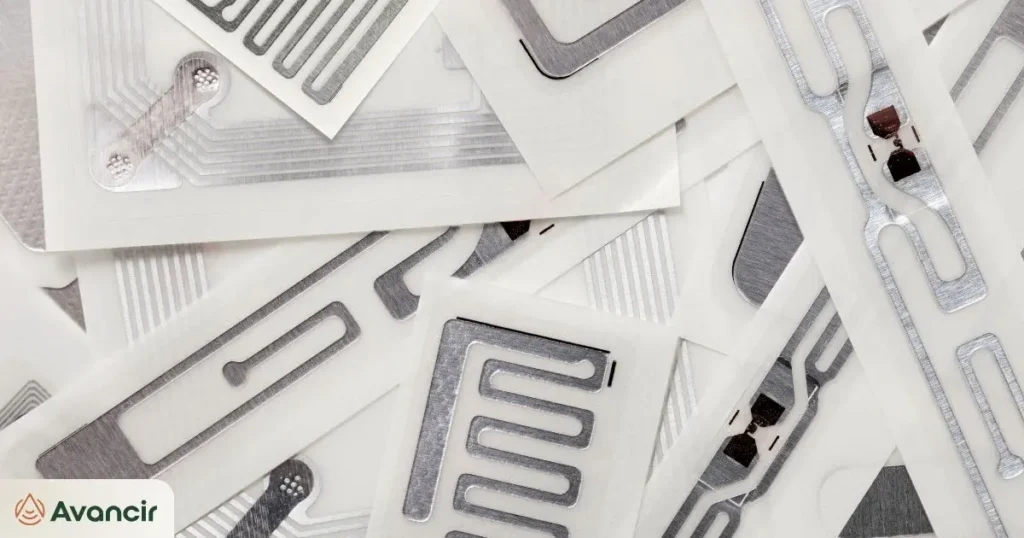
Implementation details matter. Pharmaceutical RFID tags need to match the product and packaging, and materials such as liquids and metal can affect read performance. Read zones also need to be designed around the actual workflow. In many deployments, companies use tags, RFID readers, printer-encoders, and middleware together so data can move into the systems already being used for operations and inventory control.
2. Anti-Counterfeiting and Product Authentication
Counterfeit prevention is a major reason RFID is used in pharmaceuticals. RFID does not solve that problem on its own, but it can support product authentication and improve chain-of-custody visibility at key handoff points.
Tagged products, cases, or pallets can be verified as they move through manufacturing, distribution, and receiving workflows. When RFID is connected to serialized data and traceability systems, teams have a better way to confirm that products moving through the supply chain match what is expected. That can make investigations faster and reduce the amount of manual verification required.
RFID also fits alongside barcode-based compliance rather than replacing it. DSCSA and GS1 standards still shape pharmaceutical identification and traceability workflows, but RFID can add automation where barcode-only processes stay more labor-intensive.
A commonly cited example is Pfizer’s earlier use of RFID on Viagra shipments to help address pharmaceutical counterfeiting. The broader point is that RFID anti-counterfeiting in pharma is most useful when it supports a larger traceability and authentication strategy.
3. Cold Chain Monitoring for Vaccines and Temperature-Sensitive Drugs
Cold chain workflows are another strong application for RFID because speed and visibility matter at every step. Vaccines, biologics, and other temperature-sensitive drugs often need to move through storage and shipping checkpoints quickly, without unnecessary handling or delays.
RFID can support visibility at freezers, staging areas, and shipping checkpoints by confirming what inventory is present and where it is moving. In many pharmaceutical environments, RFID works alongside sensors, software, and alerts rather than replacing them. The value comes from combining product identification with monitoring and exception management.
For companies using RFID for vaccine cold chain monitoring in pharmaceutical logistics, that can mean faster verification, fewer manual touches, and better control over sensitive inventory as it moves through the pharmaceutical supply chain.
4. Expiration Tracking and Faster Recall Management
Recalls become much harder when product visibility is limited. Teams spend time searching, sorting, and confirming which inventory should be pulled or quarantined. RFID helps by making affected inventory easier to locate and verify across storage areas, facilities, and distribution points.
That same visibility can also support expiration tracking when RFID reads are tied to the right backend data. The read itself is only part of the process. The system also needs to connect that product to the appropriate lot, batch, or item-level information. When that data structure is in place, pharma teams can move faster during recalls, reduce the chance of missed inventory, and improve control over expiring stock.
This is one of the clearest operational benefits of RFID in pharmaceutical supply chain traceability. RFID for pharmaceutical inventory management and expiration tracking works best when it is integrated with ERP, WMS, inventory, or compliance systems that can put the data to use.
5. Hospital and Pharmacy Replenishment
RFID can also improve replenishment in downstream healthcare environments. Pharmaceutical companies and distributors often need better visibility into what hospitals, pharmacies, or clinical storage areas actually have on hand. Without that visibility, replenishment tends to become more reactive and more labor-intensive, with a greater risk of stockouts.
With RFID-enabled workflows, teams can monitor inventory levels in cabinets, shelves, or storage rooms and respond sooner when supply drops. That helps reduce stockouts of critical medications, improve replenishment timing, and verify that the right products are restocked in the right locations.
This matters because replenishment accuracy affects both operations and service levels. RFID medication tracking supports not only product movement through the supply chain, but also product availability where it is needed.
What It Takes to Implement RFID Successfully in Pharma
Successful RFID deployments in pharma usually come down to a few practical decisions. The tag needs to fit the packaging material and environment. Read zones need to be designed around the workflow. The system needs to account for interference from liquids, metal, and dense packaging. RFID data also needs to integrate with the platforms already supporting operations, inventory, and compliance.
Pilot testing is an important part of that process. Pharmaceutical RFID tags, readers, printers, and software should be tested in real operating conditions before a broader rollout. The right setup depends on the product, the packaging, and the specific workflow the business is trying to improve.
FAQ
Is RFID better than barcodes for pharmaceuticals?
Not in every case. Barcodes still make sense for many compliance and identification workflows. RFID is often a better fit when companies want bulk reads, more automation, and less dependence on line-of-sight scanning.
Can RFID help prevent counterfeit drugs?
Yes, as part of a broader traceability and authentication strategy. RFID can improve product verification and chain-of-custody visibility, but it works best when combined with the right systems and processes.
What pharma products can be tagged with RFID?
Depending on the packaging and workflow, companies can tag vials, syringes, cartons, kits, cases, and pallets.
Contact Avancir
Pharmaceutical companies use RFID to improve inventory visibility, strengthen traceability, support faster recalls, and manage replenishment with less manual effort. The right approach depends on the product, packaging, environment, and workflow, which is why most teams start by evaluating where better data capture would make the biggest operational difference.
To discuss what RFID could look like in your environment, facility, or use case, contact Avancir.